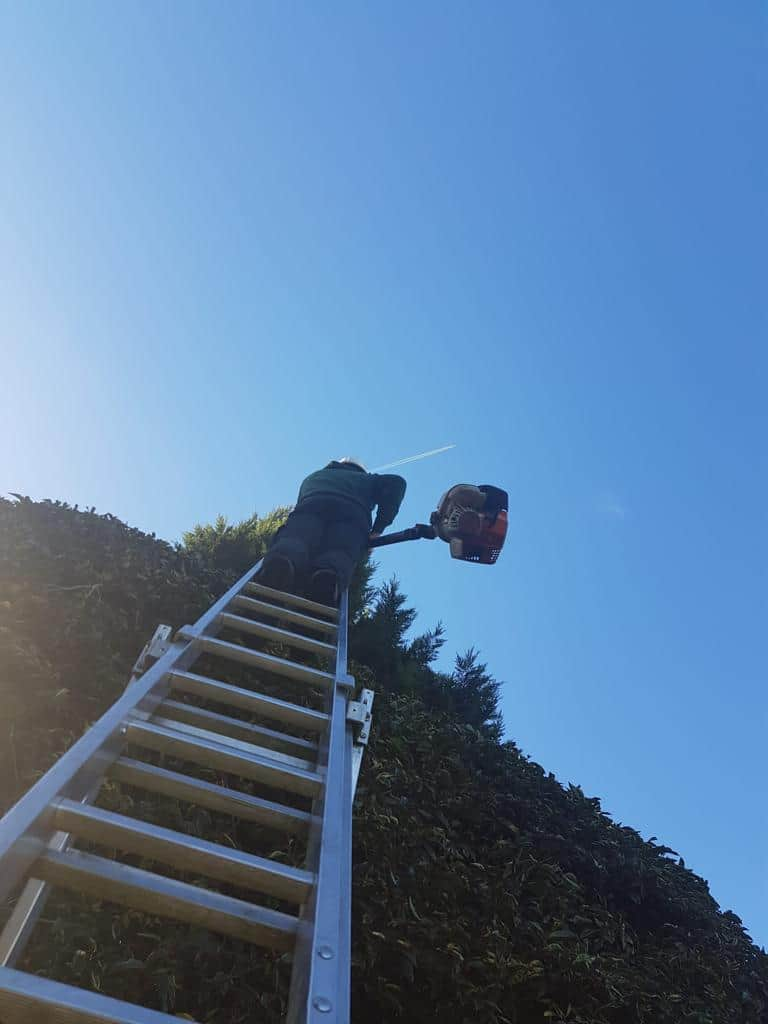
Trees can become an important feature of gardens and outdoor spaces, but their size and shape sometimes need to be managed carefully. When a tree becomes too large for its surroundings, has developed an uneven canopy or is interfering with nearby space, crown reduction may provide a suitable management option.
For properties in Colesbourne, Gloucestershire, professional crown reduction can help manage the overall dimensions of a tree while retaining an appropriate natural shape. The work needs to be carefully planned, as excessive pruning can place unnecessary stress on a tree.
What Is Crown Reduction?
Crown reduction is a tree pruning technique used to reduce the overall size of a tree’s crown. Rather than simply removing large branches from the top or sides, selected branches are shortened back to suitable growth points throughout the canopy.
The aim is to create a smaller, balanced crown while maintaining the tree’s natural appearance and structure. The amount of reduction required depends on the tree species, condition, size and surrounding environment.
A professional approach is important because removing too much growth can affect the tree’s ability to recover.
Why Might a Tree Need Crown Reduction?
Trees can sometimes outgrow the space available to them. Branches may extend towards buildings, paths, gardens or other areas where their size becomes difficult to manage.
Crown reduction can be considered when a tree’s canopy has become excessively large or when its overall shape needs to be brought back into proportion.
It is not simply a matter of cutting a tree down to a smaller size. The pruning needs to consider the tree’s structure and how it is likely to respond to the work.
How Crown Reduction Can Help Manage Tree Size
One of the main purposes of crown reduction is to decrease the overall spread and height of a tree without removing the entire canopy.
Carefully selected branches are shortened so that the tree remains balanced. This can help create greater clearance around surrounding areas while retaining much of the tree’s natural form.
The objective is controlled growth management rather than drastic removal.
Supporting Healthy Tree Growth
Appropriate pruning can help maintain a well-structured crown by removing selected branches that are poorly positioned, damaged or contributing to an uneven canopy.
However, crown reduction should not be treated as a routine solution for every tree. Healthy trees still need sufficient foliage to produce energy and support normal growth.
A professional tree surgeon can assess the tree’s condition and determine whether crown reduction is appropriate, along with how much growth can reasonably be removed.
What Happens During Crown Reduction?
Before work begins, the tree should be assessed carefully. Factors such as species, age, health, branch structure and surrounding space all influence how pruning should be carried out.
The tree surgeon identifies suitable branches for reduction and works progressively through the crown. Cuts should be made carefully to suitable lateral branches, helping maintain a natural structure.
The finished tree should have a reduced but balanced canopy rather than an obviously shortened or uneven appearance.
Crown Reduction Compared with Heavy Pruning
Crown reduction should not be confused with simply cutting large sections from a tree. Heavy or poorly planned pruning can leave large wounds and significantly reduce the tree’s foliage.
Excessive removal can also encourage vigorous regrowth that may result in an undesirable shape.
A carefully planned reduction focuses on achieving the required change in size while retaining as much of the tree’s healthy structure as possible.
When Is Crown Reduction Suitable?
Crown reduction may be considered when a tree has become too large for its available space or when its canopy needs to be brought back into balance.
It can also be useful where branches are extending further than intended or where the tree’s overall proportions have become difficult to manage.
Not every tree responds to reduction in the same way, so professional assessment is important before deciding on the extent of pruning.
Why Professional Tree Surgery Matters
Crown reduction requires knowledge of tree structure, growth patterns and appropriate pruning techniques. Cutting branches without understanding how the tree will respond can lead to unnecessary damage.
A professional tree surgeon can assess the condition of the tree, identify suitable pruning points and carry out the work with the aim of maintaining a healthy and balanced canopy.
The surrounding area should also be considered so that the work can be completed safely and with minimal disruption.
Crown Reduction in Colesbourne, Gloucestershire
For properties in Colesbourne, Gloucestershire, EM Tree Surgery Colesbourne provides professional crown reduction to help manage tree size while maintaining an appropriate natural structure.
If you have a tree that has become too large for its surroundings or you are unsure whether crown reduction is suitable, contact EM Tree Surgery Colesbourne to discuss the tree and arrange a professional assessment.
Conclusion
Crown reduction can be an effective way to manage the size and shape of a tree without removing the entire canopy. When carefully planned and carried out using appropriate pruning techniques, it can help maintain a balanced structure while allowing the tree to continue growing.
For trees in Colesbourne, Gloucestershire, professional assessment is important before any reduction work takes place. The right approach depends on the individual tree, its condition and the space around it, ensuring that pruning is carried out with its long-term health in mind.
Call us on: 01242 569 996
Click here to find out more about EM Tree Surgery Colesbourne
Click here to complete our contact form and see how we can help with your tree needs.